
In short
- Google does not promise a single deadline: some changes work after a few hours, others after a few months.
- Google advises waiting a few weeks before you judge the results of your actions.
- The time depends on the age of the website, its technical condition, the competition and the quality of the content.
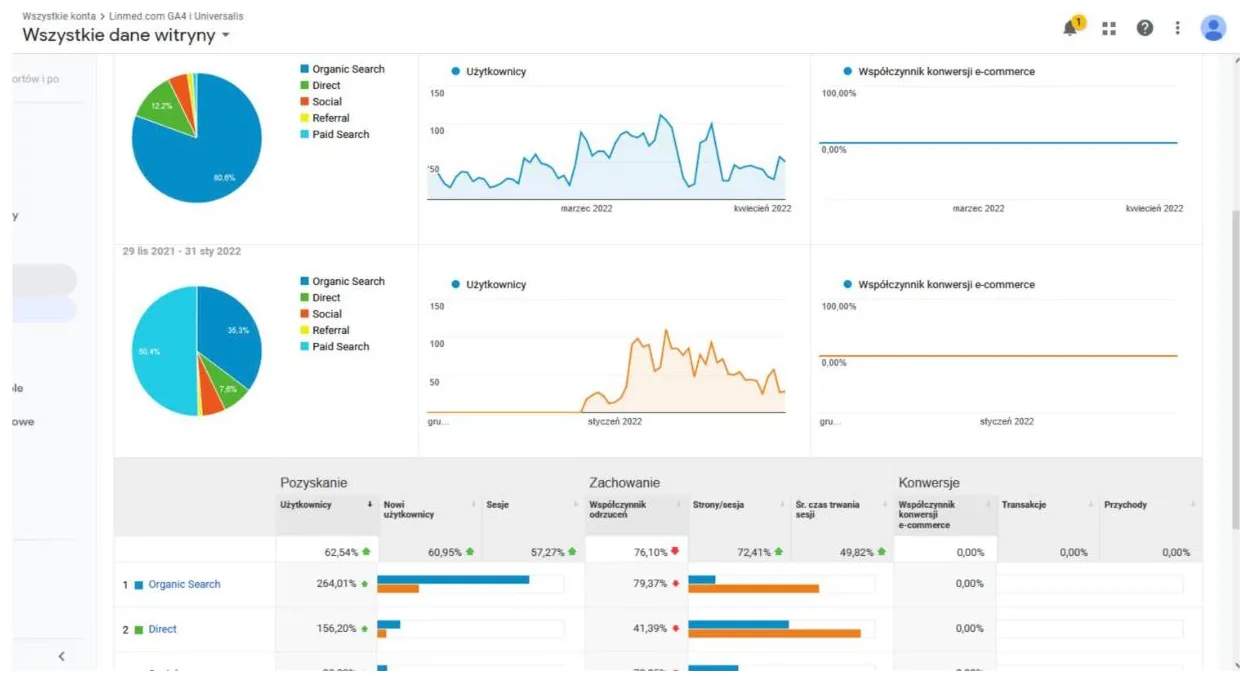
- You measure progress in Search Console: impressions, clicks, CTR and average position.
Table of contents (10)
- What Google says about the time to results
- Why it is so hard to give one deadline
- What the time of SEO depends on
- What the timeline looks like, without fortune-telling
- How to measure progress in Search Console
- The most common reasons why results are delayed
- What can be sped up, and what cannot
- How to talk about deadlines with a contractor
- Where to start
- Frequently asked questions
The question "how long does SEO take" has no single number, because Google promises none. Google's documentation says plainly that some changes work after a few hours, while others need a few months. The first signals (pages in the index, rising impressions) are usually visible earlier than a rise in enquiries from clients. In this post I show what the time depends on, what to realistically expect and how to check progress in Google's free tool.
What Google says about the time to results
The best source is the SEO starter guide in Google Search Central. It contains two sentences worth remembering. The first: some changes may take effect in a few hours, others in a few months. The second: it is worth waiting a few weeks before you judge whether your actions have improved the results.
You will not find a promised number of months there. Offers often include a range of "4-12 months" attributed to Google. In the current documentation that I checked, there is no such wording, so I do not quote it. If someone guarantees a specific date for first place, that is a warning sign. In its page "Do you need an SEO?", Google also advises asking the specialist what results they expect and in what time, and being sceptical about guarantees.
From practice: The most common mistake I see is judging SEO after two weeks. By then Google often has not yet fully processed the changes on the website.
Why it is so hard to give one deadline
Before a page appears in the results, Google has to find it, read it and save it in the index. How search works: the robot does not visit all the addresses it finds, and indexing is not guaranteed. Not every processed page ends up in the index. That is the first reason why the time varies.

The second reason is competition. Whoever fights for a general phrase will face more pages than someone who optimises a service in one city. The third is the starting point: a new domain starts from zero, while a website with history and content already has something to build on.
What the time of SEO depends on
From my experience, a few things decide the pace:
- The age and history of the website. A new site needs more time to build trust than a website that has existed for years.
- Technical condition. A website blocked for robots or a slow one delays everything else.
- Competition for the chosen phrases. A local phrase is usually easier than a nationwide one.
- The quality and fit of the content. The content has to answer what the client is looking for.
- Regularity of work. A one-off fix gives less than steadily developing the site.
Choosing phrases is a separate subject, which I described in the article how to choose keywords.
What the timeline looks like, without fortune-telling
Instead of promising dates, I prefer to talk about stages. The table below is my way of organising the work, not numbers given by Google.
| Stage | What happens | Where you will see it |
|---|---|---|
| Technical clean-up | The site is accessible to robots, without errors | The indexing report in Search Console |
| Indexing | The key subpages get into the index | URL Inspection, the site: operator |
| Visibility | Impressions for new phrases grow | The Performance report |
| Clicks | Positions improve, the number of visits grows | The Performance report |
| Enquiries | Traffic turns into phone calls and forms | Your own data on enquiries |
The last stage depends not only on positions, but also on whether the website persuades. I write about that in a website that generates enquiries.
How to measure progress in Search Console
The free Google Search Console shows four basic indicators. Impressions are when a user saw (or could have seen) a link to your website in the results. Clicks are visits to your website. CTR is clicks divided by impressions. Position is the average position across all queries in which your website appeared. It is an average, so for a single phrase it may be different.
How to read this data in practice:
- Start with impressions. They rise first, when Google begins to show you for new phrases.
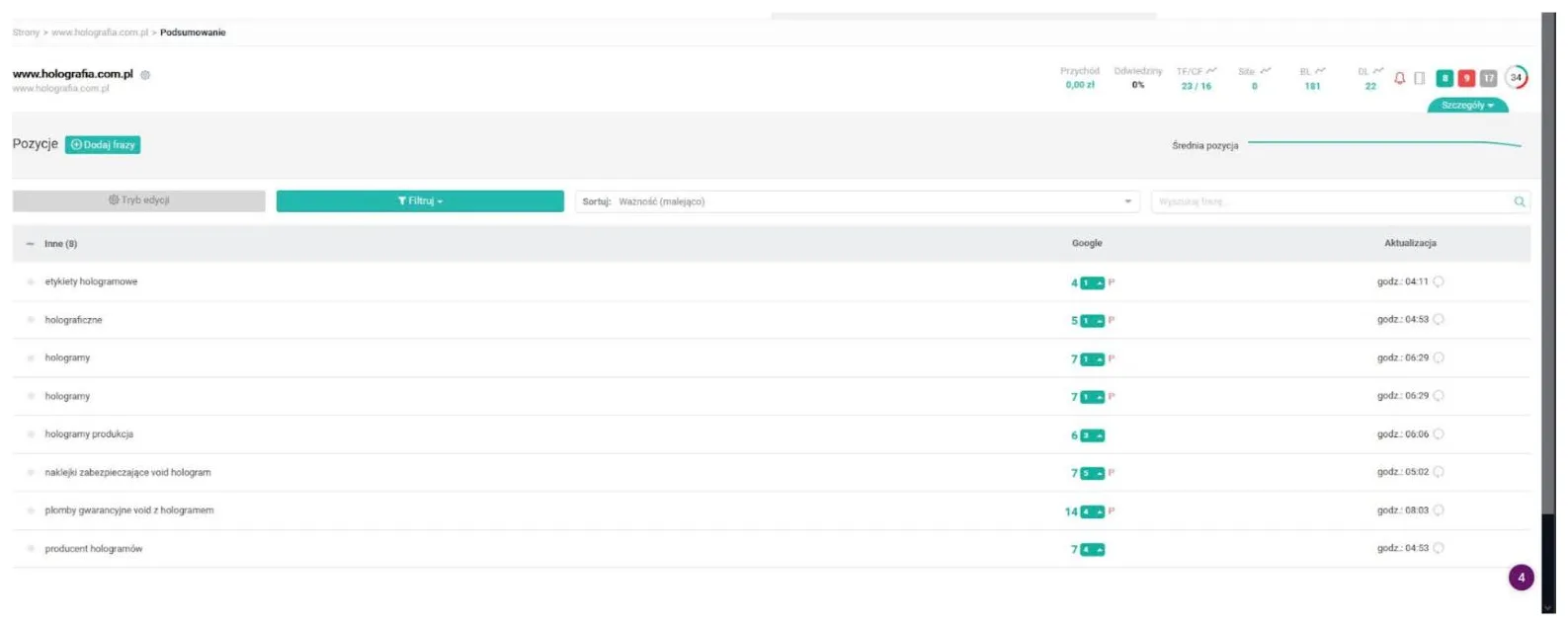
- Then look at the position for the 3-5 most important queries, each separately, not the average for the whole website.
- Only at the end assess clicks. Position 8 gives impressions, but few visits.
- Compare periods of the same length, for example the last 28 days with the previous 28 days.

Check also the page indexing report. Google notes in it that you should not expect all addresses to be indexed, only canonical pages. After you submit fixes, validation usually takes up to about two weeks, and sometimes much longer. It is worth remembering this before you decide that a fix did not work.
From practice: I record the state on the first day: the number of impressions, the positions of a few phrases and the number of pages in the index. Without that reference point, after three months nobody can say whether anything has changed.
The most common reasons why results are delayed
From conversations with business owners it appears that a delay rarely comes from a single cause. I most often see three situations.
First: changes are made chaotically. A new title today, a new subpage next week, then a rebuild of the menu. Then you do not know what worked, and Google has to process the website from scratch each time. Second: the website has content, but it does not answer the questions clients type into the search engine. Third: important subpages have not got into the index at all, and nobody has checked.
That is why I devote the first month of work to diagnosis, not to further fixes. Then I know whether we are waiting for Google or the problem lies on the website's side. If you want to check this yourself, read a website SEO audit: what to check yourself in 30 minutes.
What can be sped up, and what cannot
You can speed up what depends on you: remove technical blocks, take care of content for specific phrases, complete your business listing. For a local business the Google business listing helps, because it works independently of the website's position.
You cannot speed up what lies on Google's side: the pace of processing changes and the assessment of your website against the competition. If you need enquiries faster, consider advertising in parallel, and I described the differences in Google Ads or SEO. You will find the costs in the article how much website SEO costs.
How to talk about deadlines with a contractor
If you use a specialist's help, ask them about three things. First, which indicators they will report in the first weeks and from what source. Second, which changes they introduced and when, so that you can link them with the data. Third, what cannot be predicted. An honest contractor will tell you that some things depend on Google and the competition, and will not promise a specific position. This approach is in line with what Google itself advises in its guidance on choosing an SEO specialist.
It is also good to agree what counts as success at each stage. In the first weeks it is technical order and the index, later visibility, and only then enquiries from clients.
Where to start
- Set up and verify your website in Google Search Console, if you have not yet done so.
- Record the starting state: impressions, clicks, the positions of 3-5 main phrases, the number of indexed pages.
- Check in the indexing report whether the important subpages are in the index.
- Introduce changes in batches and record the date of each.
- Assess the effects after a few weeks, not after a few days.
If you prefer me to review your website and tell you where to start, see website SEO or simply write through the contact form. I will answer concretely, without promising positions in the results.
Frequently asked questions
How long does website SEO take?
There is no single number. Google's documentation says that some changes work after a few hours and others after a few months. Google advises waiting a few weeks before you judge the effect.
When do you see the first results of SEO?
Impressions and the number of indexed pages change earliest, and you can check them in Search Console. A rise in clicks and enquiries usually comes later.
Can anyone guarantee first place on Google?
No. Google recommends scepticism about guarantees in SEO offers and advises asking the specialist what results they expect and in what time.
How do I check whether SEO is working?
In the Performance report in Search Console, compare impressions, clicks, CTR and position for the same periods. It is best to record the starting state before making changes.
Why is my website not in the results despite fixes?
Indexing is not guaranteed, and validation of fixes in the indexing report can take about two weeks or longer. Check the reasons for non-indexing in Search Console.
Sources

Author
Piotr Babczyński
I help businesses win customers online: SEO, Google and Meta ads, automation and AI. I work from Szczecin, Poland, and remotely. I write about what I test on real projects.
- 30 years in IT
- SEO and Google Ads
- AI implementation
- #SEO
- #Search Console
- #SEO results