In short
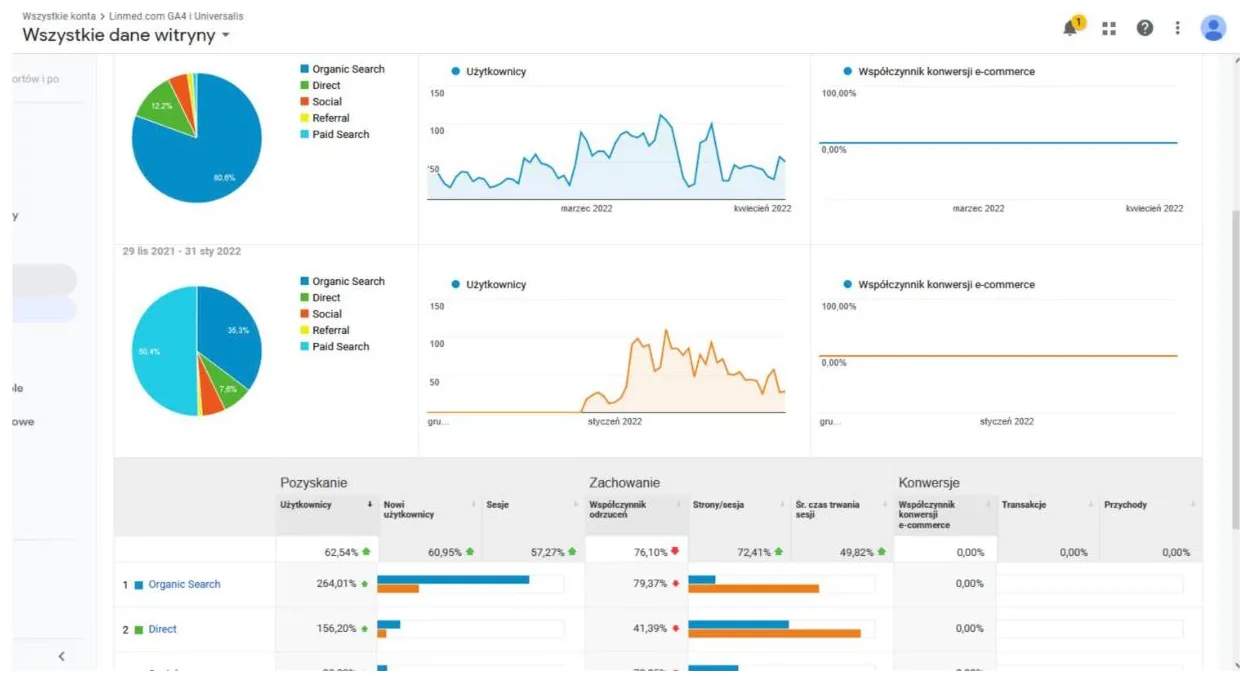
- At the start, 50.4% of traffic came from paid ads and only 35.3% from organic results.
- Organic traffic grew by 264%, and its share to 80.6% of all traffic.
- The number of site users grew by 62.5%, sessions by 57.3%.
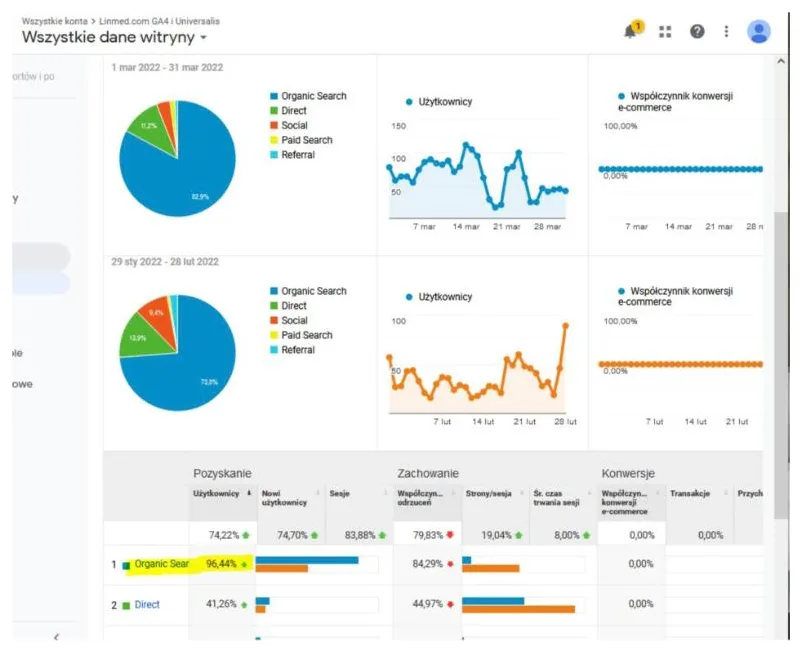
- In March 2022, compared with February, organic traffic grew by a further 96.4%.
- Google Ads stayed for specific courses, but stopped holding up the whole website.
Table of contents (6)
Linmed runs courses in qualified first aid (KPP) and training for companies. When we started, the website lived mainly off ads: all you had to do was switch off the campaign and the phone went quiet. The goal was to reverse those proportions, so that customers find the courses on Google on their own and advertising only adds enquiries.
The starting point: half the traffic was bought
In the period from 29 November 2021 to 31 January 2022, half of the visits to the website (50.4%) came from paid Google ads. Organic results, that is, visits from Google with no fee per click, gave 35.3% of traffic. The rest was direct visits and visits from social media.
This arrangement is typical of companies that start with ads. It works, but every enquiry costs money, and once the campaign is switched off the traffic disappears the same day.
What we did
We worked on two tracks.
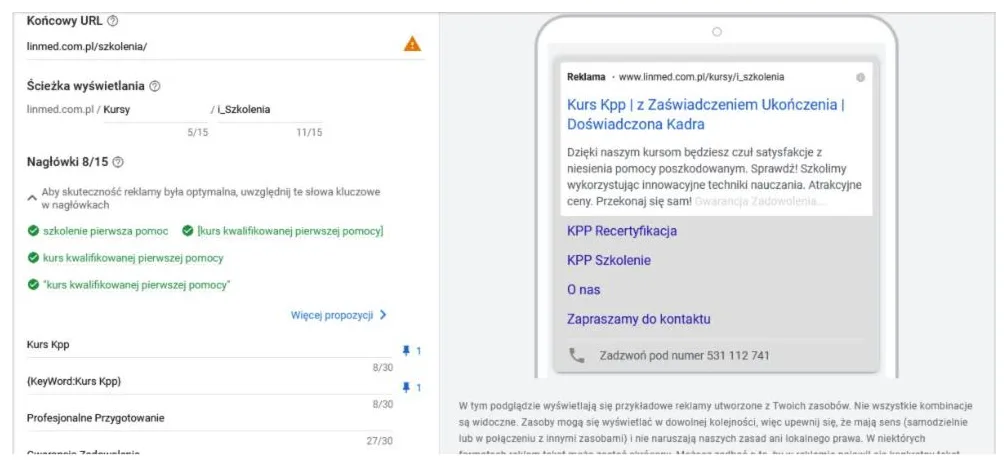
- Ads for specific courses. The Google Ads campaign led straight to the training page, with headlines built around phrases people really type: "kurs KPP" (KPP course), "kurs kwalifikowanej pierwszej pomocy" (qualified first aid course), "szkolenie pierwsza pomoc" (first aid training). Plus extensions with KPP recertification, training and a phone number, so that people could call straight from the results.
- Visibility without paying per click. In parallel, the website was developed so that it appears in ordinary Google results on the same topics.
The result: 4 in 5 people come from Google without paying
In the next period compared in Google Analytics, traffic from organic results grew by 264%. The total number of users of the site grew by 62.5%, and sessions by 57.3%. The share of organic traffic rose from 35.3% to 80.6%, and paid traffic became an add-on rather than the foundation.
The growth was not a one-off. In March 2022 compared with February:
- organic traffic: +96.4%,
- users: +74.2%,
- sessions: +83.9%.
What the business owner gets out of it
- Less dependence on the advertising budget. When most customers come from organic results, the campaign can be reduced, or switched off for a quieter month, without losing all your enquiries.
- Advertising where it makes sense. Paid traffic adds sign-ups for specific course dates, instead of holding up the whole website.
- Traffic that grows month after month, because visibility on Google accumulates.
Will it work in your business?
This pattern works wherever customers look for a service on Google: training, practices, local services. We start by checking how much traffic you buy today and how much arrives on its own. That shows where the biggest reserve is.
Frequently asked questions
Where do the figures in this case study come from?
From the Google Analytics reports of the linmed.com.pl website, comparing successive periods. Screenshots of the reports are shown in the text.
Do you have to switch off ads after organic traffic grows?
No. Advertising is still useful for specific dates and offers, but it no longer has to hold up all the traffic to the website.
How long does such an effect take?
It depends on the industry and the competition. In this case a clear rise was visible in the following months, and in March 2022 organic traffic grew by 96.4% compared with February.

Author
Piotr Babczyński
I help businesses win customers online: SEO, Google and Meta ads, automation and AI. I work from Szczecin, Poland, and remotely. I write about what I test on real projects.
- 30 years in IT
- SEO and Google Ads
- AI implementation
- #case study
- #SEO
- #Google Ads
- #training